Fall Prep, Summer Gains: Why Now’s the Time to Rethink Holding-Area Ventilation
As leaves begin to turn and the crisp fall air rolls in, many dairy producers start to relax after a long summer. But before the heat fades completely from memory, it’s important to take a closer look at one of the most overlooked areas of barn management: the holding area.
At Tunnel Plus, we’ve spent another season working with producers across the country, tackling one of the toughest microclimates in the dairy: the holding area before milking. These compact spaces may only hold cows for a short period, but the conditions inside can make or break herd performance, and the effects of poor ventilation don’t stop when summer ends.
The Hidden Heat Zone
Even in cool fall months, holding-area temperatures can climb to 70°F or more. That’s because every mature cow gives off between 1,200 and 1,500 BTUs of heat per hour, along with significant moisture through respiration and evaporation. Pack 100 cows into a confined, poorly ventilated space, and the temperature and humidity can skyrocket even if it’s 40°F outside.
When airflow drops off, cows experience rapid heat buildup, higher respiration rates, and elevated core body temperatures. Stress begins long before milking starts, and the result is predictable: reduced milk yield, lower conception rates, and increased standing time that affects hoof health and recovery.
In essence, the holding area becomes a bottleneck in an otherwise well-designed barn — especially when the main freestall system is tunnel-ventilated or cross-ventilated for high efficiency.
Two Systems, One Goal: Cow Comfort
Just like in the freestall barn, the holding area benefits from two complementary systems working together:
Air Exchange System – To remove heat, moisture, and gases efficiently.
Airspeed System – To provide directed airflow that cools cows directly.
Many holding areas rely only on air exchange, assuming that a few fans at the exit end are enough. But without proper airspeed at cow level, the heat remains trapped between animals. The goal is to keep air moving consistently across the full width and length of the holding pen, not just at the walls or roofline.
Air Exchange: Fresh Air in Tight Spaces
The first step is to move stale air out and bring in fresh air at a controlled rate. Whether the barn is tunnel, cross, or hybrid ventilated, the holding area often requires its own dedicated exhaust and inlet system.
A well-designed air exchange system should:
Turn over the air in the holding area once every 30–45 seconds.
Maintain consistent air movement even when curtains or doors are closed.
Integrate with the barn’s main ventilation controls for seamless automation.
During milking, when occupancy is high, exhaust fans should stage up automatically based on temperature and humidity (THI). In cooler seasons, variable-speed fans can maintain gentle airflow without chilling cows.
Airspeed: Cooling Cows Where They Stand
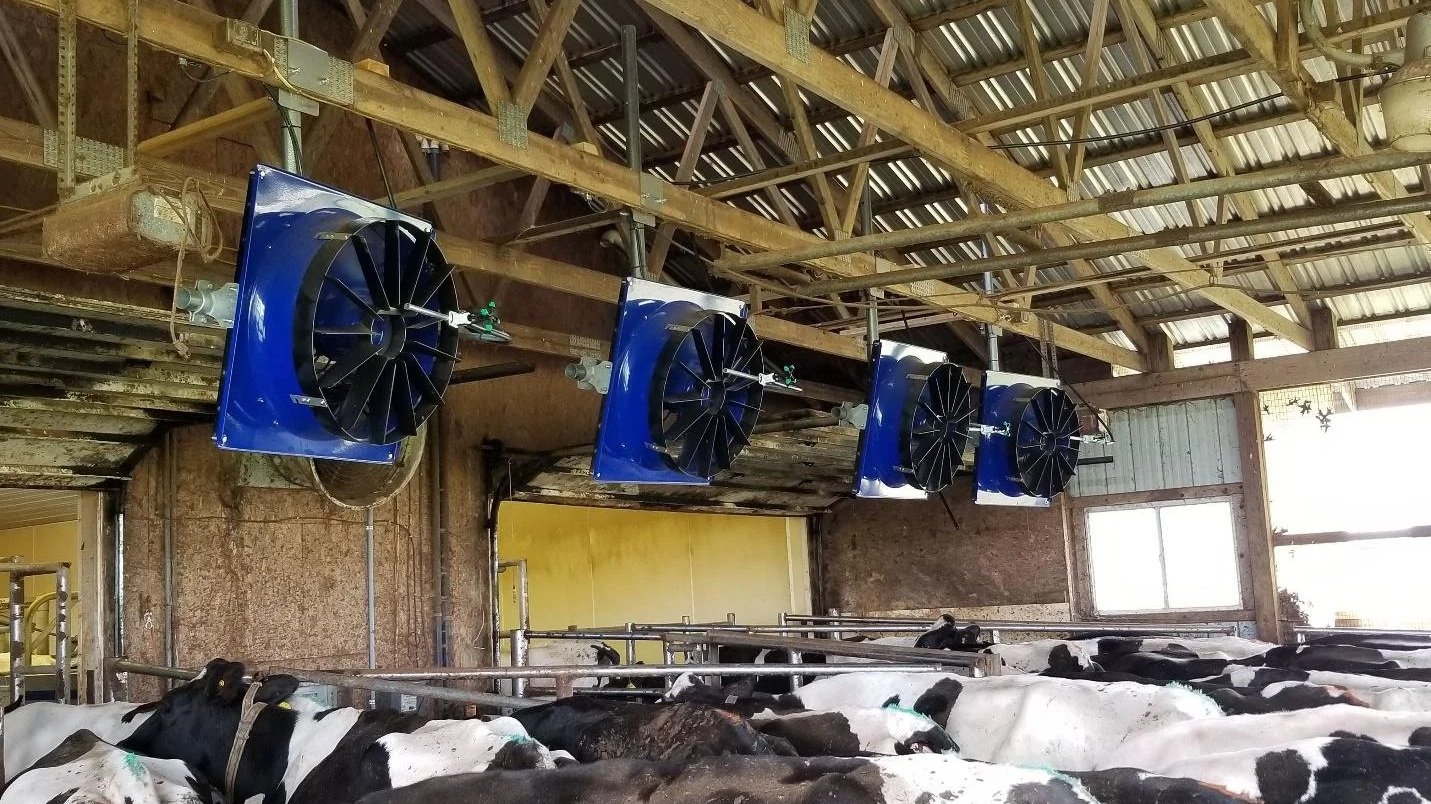
Once air exchange is established, the next step is targeted airflow focused directly on the cows. Overhead or wall-mounted fans positioned above the crowd gate, along the pen sides, and near return lanes help maintain airspeeds of 10–15 mph across cow level.
At Tunnel Plus, our ZAplus variable-speed fans are designed specifically for these tight, high-humidity zones. They deliver consistent airflow at lower temperatures, starting 20–25°F sooner than traditional single-speed fans. That means air starts moving before heat stress begins, not after it’s already costing milk.
Variable-speed technology also reduces electrical costs by up to 50%, qualifying many producers for energy-efficiency grants and rebates.
Automation: Precision Control 24/7
Modern controllers can now integrate holding-area fans, inlets, and even crowd gates into one smart system. These controllers monitor:
Temperature and humidity (THI)
Cow activity and occupancy
Milking cycles and downtime
By tying these data points together, automation ensures that the holding area maintains optimal conditions, whether it’s a hot July afternoon or a frosty November morning.
Automated systems also eliminate human error and labor demands, adjusting airflow in real-time for storms, crosswinds, or sudden temperature changes.
Water Cooling: When Air Alone Isn’t Enough
Adding low-pressure misting or cooling directly in front of fan airflows can dramatically improve heat abatement, particularly in large herds. Unlike sprinklers, which waste water and cause wet floors, low-pressure water systems use minimal water while delivering effective evaporative cooling right at cow level.
Automated THI-based controllers can activate misting cycles as humidity allows, keeping cows cooler without over-saturating the air or flooring.
The Best Time to Evaluate Your System
Fall and winter are ideal times to evaluate, upgrade, or retrofit holding-area ventilation. Cooler months bring:
Easier access for installations and retrofits.
Off-season pricing and scheduling advantages.
Time to test and calibrate systems before next summer’s heat hits.
By tackling these upgrades now, producers can protect next year’s performance, ensuring cooler, calmer cows from the holding area to the parlor.
Next Stop: The American Dairy Xpo in Vermont
The Tunnel Plus team is excited to showcase our newest ventilation innovations at the 2025 American Dairy Xpo in Vermont, a fresh opportunity for dairy professionals to connect, learn, and explore the latest in climate control technology.
Visit the Tunnel Plus booth ( booths 48E & 47E) to see our high-efficiency fan line in action and talk directly with our team about custom solutions for your barn.
Remember: Next Summer’s Comfort Starts This Fall
The holding area might be one of the smallest spaces on your farm, but it’s also one of the most critical for maintaining performance and preventing heat stress.
With proper air exchange, airspeed, and automation, you can turn the most challenging part of the milking cycle into one of the most efficient.

Brent Hershey,
President
Tunnel Plus™
4-Season Ventilation & Cooling Systems